Sinus Infection or Tooth Pain? How to Tell the Difference
If you are feeling pressure in your face or pain in your upper teeth, it can be difficult to know what is causing it. Is it a sinus infection or tooth pain?
Many patients experience symptoms that overlap between sinus infections and dental problems. While they can feel similar, the cause and treatment are very different. Understanding the difference helps you take the right next step and avoid delays in care.
Key Takeaways
Sinus infection vs tooth pain can feel very similar, especially in the upper back teeth
Sinus pressure tooth pain usually affects multiple teeth and includes congestion or facial pressure
Tooth pain is typically isolated and triggered by chewing, temperature, or sweets
Sinus infection symptoms often follow a cold, allergies, or seasonal illness
Persistent or worsening tooth pain should always be evaluated by a dentist
A dental exam can quickly determine whether your pain is sinus-related or tooth-related
What Is Sinus Infection vs Tooth Pain?
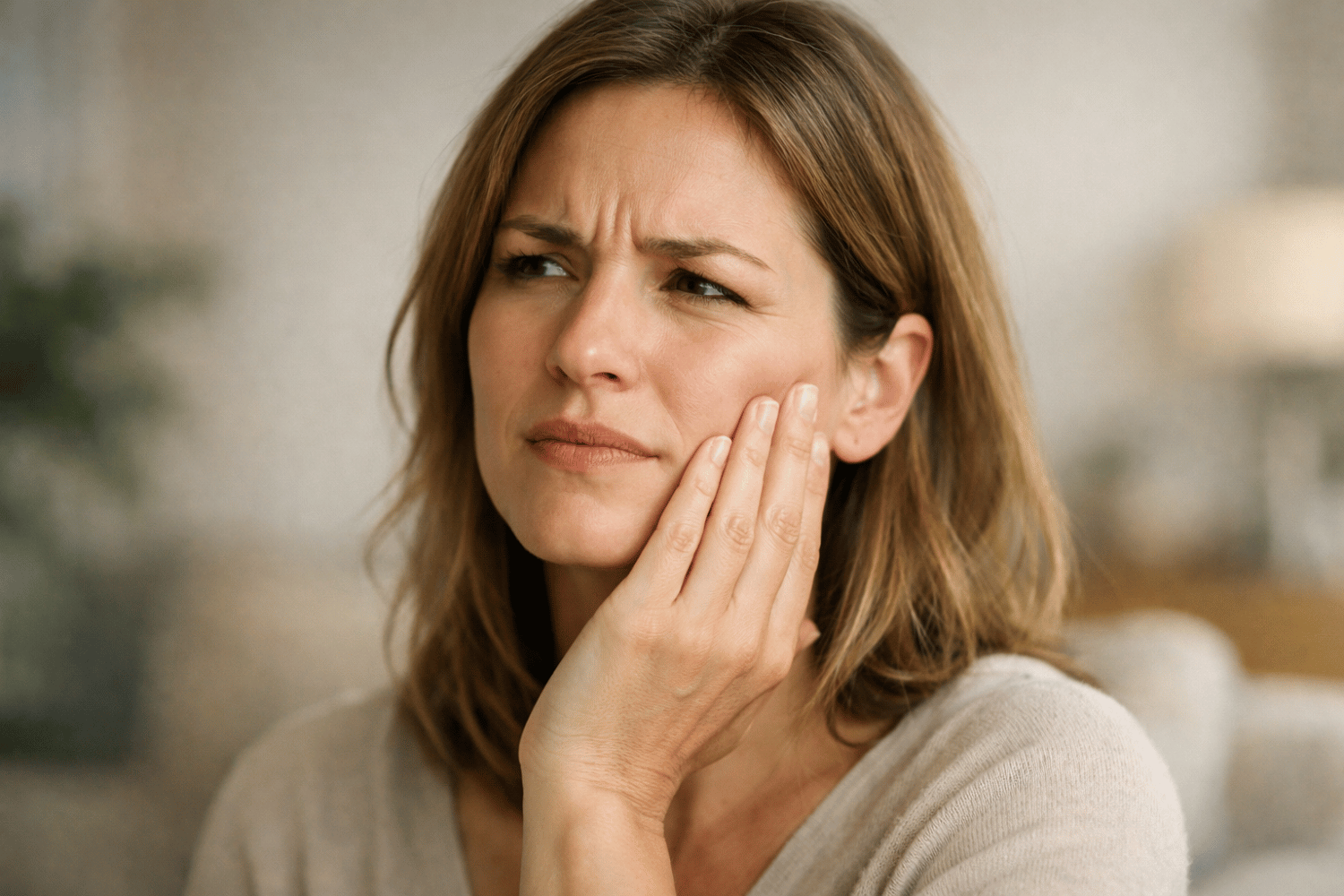
Sinus infection vs tooth pain refers to two different conditions that can produce very similar symptoms in the upper jaw and face.
A sinus infection occurs when the sinus cavities become inflamed, often due to bacteria, viruses, or allergies. This inflammation creates pressure in the sinus space.
Tooth pain, on the other hand, is typically caused by issues within the tooth or surrounding structures, such as cavities, infection, cracks, or gum disease.
Because the roots of your upper teeth sit close to your sinuses, pressure from a sinus infection can feel like it is coming from your teeth. This overlap is what makes it difficult to tell the difference without a proper evaluation.
Why a Sinus Infection Can Cause Tooth Pain in Upper Teeth
Your maxillary sinuses are located just above your upper back teeth. In some cases, the roots of these teeth extend very close to the sinus floor.
When a sinus infection develops, inflammation and fluid buildup create pressure inside the sinus cavity. That pressure pushes downward onto the tooth roots, creating what feels like tooth pain.
What this pressure feels like:
A dull, aching sensation in the upper teeth
Pressure that spreads across multiple teeth
Increased discomfort when bending over or lying down
A feeling of fullness in the cheeks or face
This type of sinus pressure tooth pain is not caused by damage to the tooth itself, which is why dental treatment may not resolve the discomfort if the sinus infection is the true cause.
What Does Tooth Pain Feel Like?
Tooth pain caused by a dental issue is usually more localized and specific.
Unlike sinus infection tooth pain, dental pain tends to come from a single tooth and often has a clear trigger.
Common symptoms of dental tooth pain:
Pain in one specific tooth
Sharp, throbbing, or constant discomfort
Sensitivity to hot, cold, or sweet foods
Pain when biting or chewing
Swelling in the gums or jaw
A bad taste or odor, which may indicate infection
Tooth pain is often a sign of an underlying issue such as decay, infection, or structural damage. As explained in , persistent sensitivity or discomfort is a signal that something deeper may need treatment.
Sinus Infection vs Tooth Pain: Key Differences
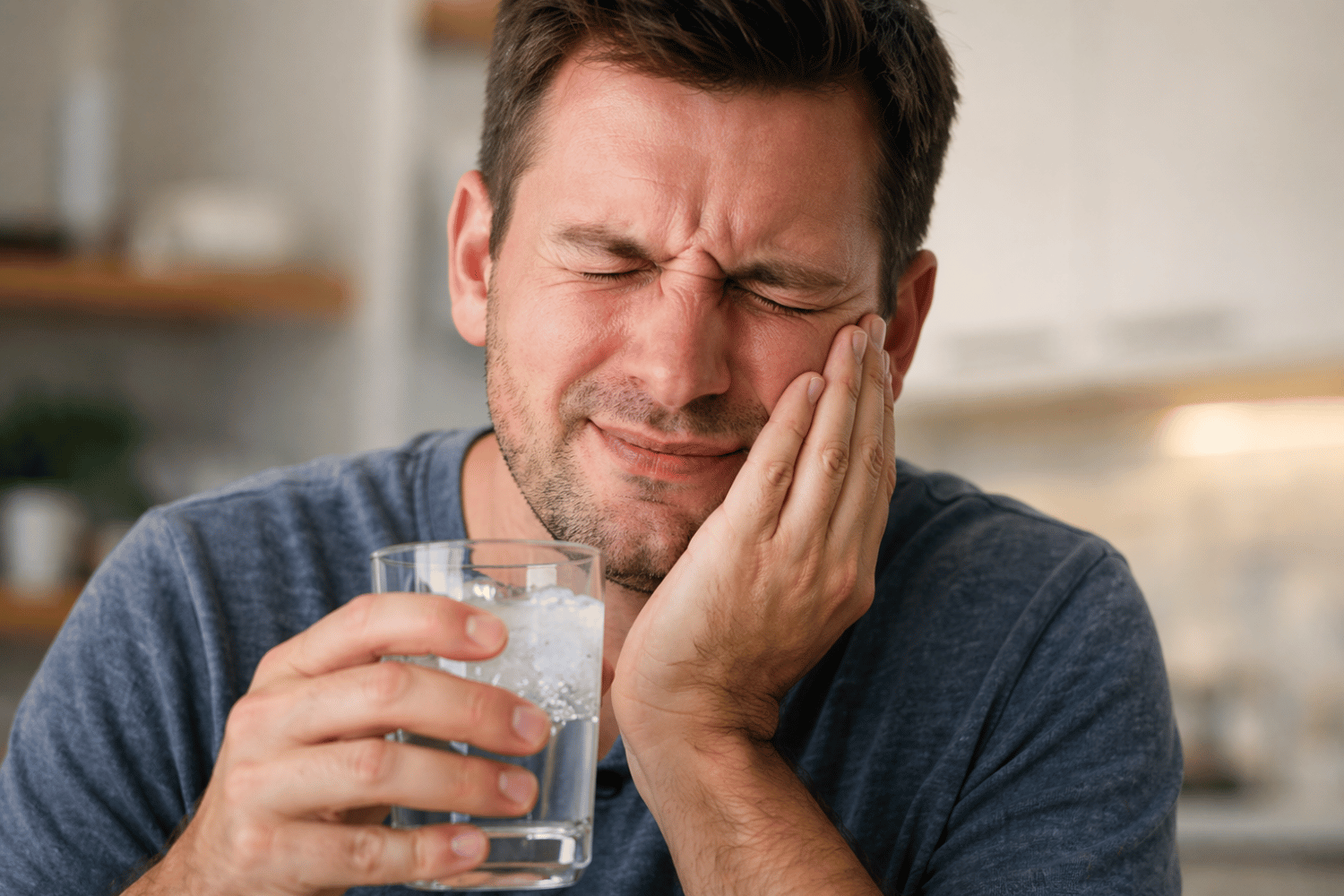
Understanding the difference between sinus infection vs tooth pain can help you identify the source of your discomfort.
Sinus pain is dull, pressure-based, and widespread
Tooth pain is sharp, throbbing, or highly sensitive
Triggers
Sinus pressure tooth pain worsens with bending over or congestion
Tooth pain worsens with chewing, temperature, or sweets
Additional Symptoms
Sinus infection symptoms include congestion, headache, and facial pressure
Tooth pain may include swelling, visible damage, or gum irritation
How to Tell the Difference Step by Step
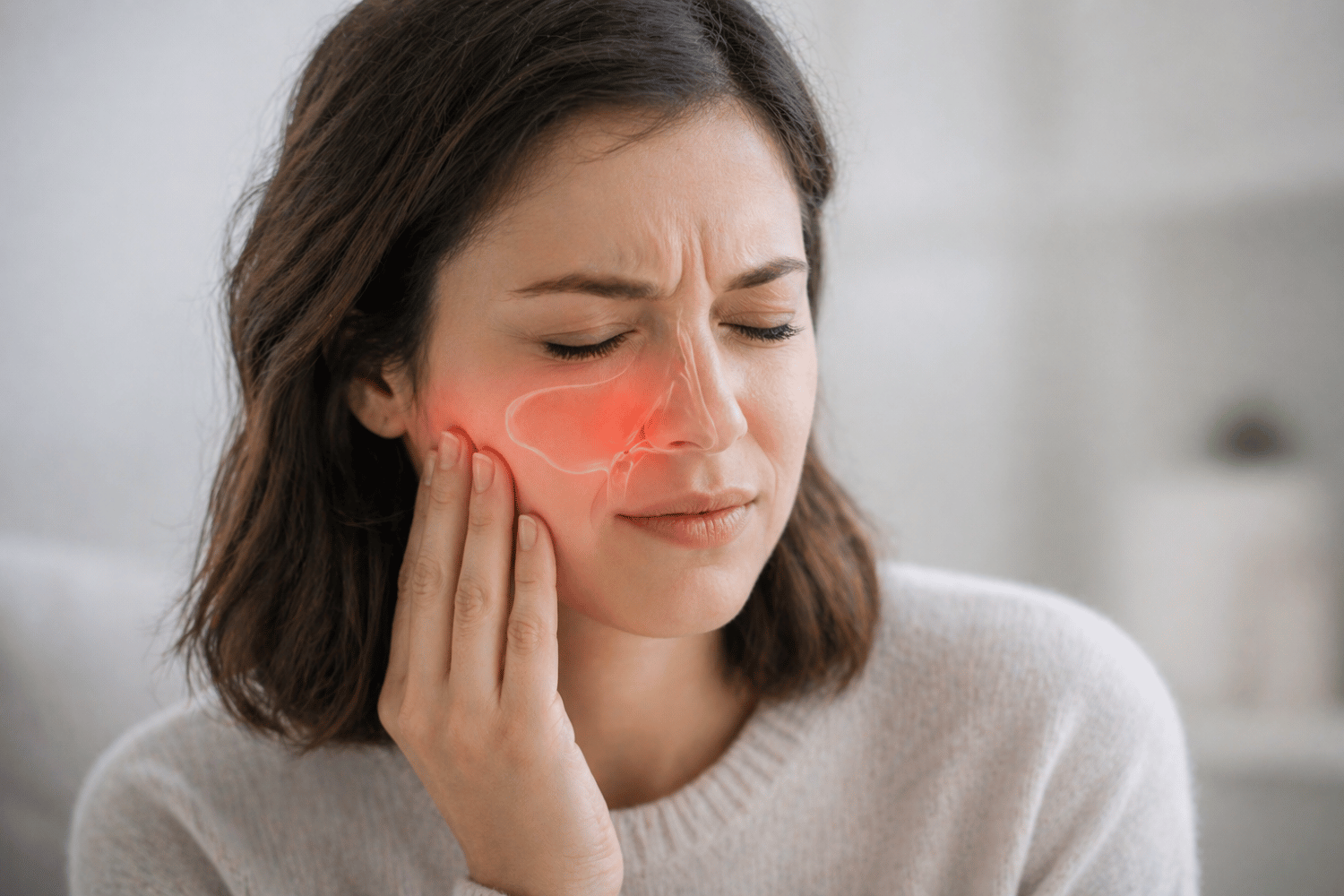
If you are unsure whether you are dealing with sinus infection vs tooth pain, use this simple step-by-step approach:
Check how many teeth hurt Multiple teeth usually point to sinus pressure. One tooth suggests a dental issue.
Notice what triggers the pain Pain from hot, cold, or chewing is more likely dental. Pressure-related pain is often sinus-related.
Look for sinus symptoms Congestion, facial pressure, or a recent cold often indicate a sinus infection.
Monitor how long it lasts Sinus pain often improves as congestion clears. Tooth pain typically persists or worsens.
Evaluate intensity and location Sharp, localized pain is more likely dental. Diffuse pressure is more likely sinus-related.
Why Getting the Right Diagnosis Matters
Misidentifying sinus infection vs tooth pain can lead to delays in treatment or unnecessary procedures.
For example:
Treating sinus pain as a dental issue may not resolve symptoms
Ignoring tooth pain can allow infection to worsen
Delayed care can lead to more complex and costly treatment
Early and accurate diagnosis allows for:
Faster relief from pain
More conservative treatment
Better long-term oral and overall health outcomes
How Dentists Diagnose Sinus vs Tooth Pain
A dental evaluation is one of the most effective ways to determine whether your pain is sinus-related or tooth-related.
At Today’s Dental, your visit is designed to be thorough and easy to understand.
During your appointment, we may:
Examine your teeth and gums visually
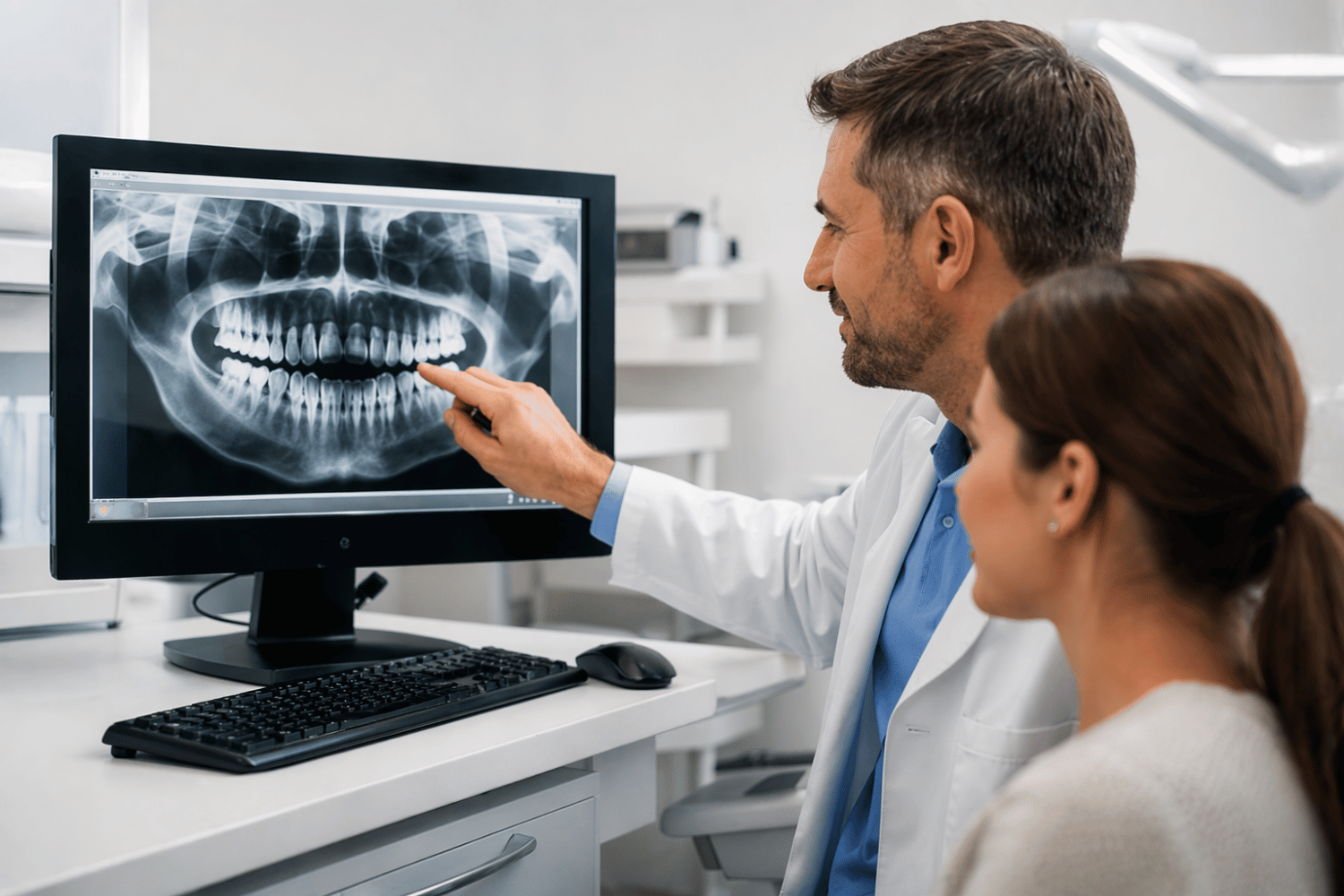
Take digital X-rays to identify hidden decay or infection
Test your teeth for sensitivity to temperature and pressure
Ask about symptoms like congestion, headaches, or recent illness
This process helps us clearly determine whether the source of your discomfort is a sinus infection or a dental problem.
Routine preventive care, like visits described in , can also help detect issues early before they become painful.
What to Expect at Your Appointment
If you come in with tooth or facial pain, your visit will focus on identifying the cause and making you comfortable.
A typical evaluation includes:
Reviewing your symptoms and health history
Identifying patterns in your pain
Using imaging to confirm a diagnosis
Explaining findings in clear, simple terms
If the issue is dental, we will discuss treatment options right away. If your symptoms point to a sinus infection, we will guide you toward appropriate medical care.
Can Sinus Infections and Tooth Pain Happen Together?
Yes, sinus infection and tooth pain can sometimes occur at the same time.
A sinus infection can irritate nearby tooth roots
A dental infection can extend toward the sinus
Because of this connection, a professional evaluation ensures that both possibilities are properly considered.
When to See a Dentist vs a Doctor
Knowing where to go depends on your symptoms.
See a dentist if:
Pain is focused on one tooth
You have sensitivity to hot, cold, or pressure
You notice swelling, damage, or a bad taste
Pain continues or worsens over time
See a doctor if:
You have congestion, sinus pressure, or fever
Pain affects multiple upper teeth
Symptoms began with a cold or allergies
Pain improves with sinus relief
Not sure where to start?
A dental exam is often the fastest way to rule out a tooth-related problem.
Not Sure What’s Causing Your Pain?
If you are trying to determine whether you have sinus infection vs tooth pain, consider these questions:
Does the pain affect one tooth or several teeth?
Does it worsen when bending over?
Do you have congestion or sinus pressure?
These patterns can help guide your thinking, but a professional diagnosis provides the most accurate answer.
If you are experiencing sinus pressure tooth pain or a persistent toothache and are unsure of the cause, a professional evaluation can provide clarity.
At Today’s Dental, we focus on clear communication, accurate diagnosis, and personalized care so you always understand what is happening and what comes next.
Schedule your appointment today to determine whether your pain is caused by a sinus infection or a dental issue and get the relief you need.
FAQs
Can a sinus infection cause tooth pain in multiple teeth? Yes. Sinus infection tooth pain often affects several upper teeth due to pressure from inflamed sinuses.
How can I tell if it is sinus infection vs tooth pain? Sinus pain usually includes congestion and affects multiple teeth, while tooth pain is typically isolated and triggered by chewing or temperature.
Will sinus pressure tooth pain go away on its own? It often improves as the sinus infection clears, especially with rest or medication.
Should I see a dentist for sinus infection tooth pain? Yes. A dentist can rule out dental causes and help determine whether the pain is sinus-related.
What happens if tooth pain is left untreated? Untreated tooth pain can worsen and may lead to infection or more advanced dental treatment.
This mode enables people with epilepsy to use the website safely by eliminating the risk of seizures that result from flashing or blinking animations and risky color combinations.
Visually Impaired Mode
Improves website's visuals
This mode adjusts the website for the convenience of users with visual impairments such as Degrading Eyesight, Tunnel Vision, Cataract, Glaucoma, and others.
Cognitive Disability Mode
Helps to focus on specific content
This mode provides different assistive options to help users with cognitive impairments such as Dyslexia, Autism, CVA, and others, to focus on the essential elements of the website more easily.
ADHD Friendly Mode
Reduces distractions and improve focus
This mode helps users with ADHD and Neurodevelopmental disorders to read, browse, and focus on the main website elements more easily while significantly reducing distractions.
Blindness Mode
Allows using the site with your screen-reader
This mode configures the website to be compatible with screen-readers such as JAWS, NVDA, VoiceOver, and TalkBack. A screen-reader is software for blind users that is installed on a computer and smartphone, and websites must be compatible with it.
Online Dictionary
Readable Experience
Content Scaling
Default
Text Magnifier
Readable Font
Dyslexia Friendly
Highlight Titles
Highlight Links
Font Sizing
Default
Line Height
Default
Letter Spacing
Default
Left Aligned
Center Aligned
Right Aligned
Visually Pleasing Experience
Dark Contrast
Light Contrast
Monochrome
High Contrast
High Saturation
Low Saturation
Adjust Text Colors
Adjust Title Colors
Adjust Background Colors
Easy Orientation
Mute Sounds
Hide Images
Hide Emoji
Reading Guide
Stop Animations
Reading Mask
Highlight Hover
Highlight Focus
Big Dark Cursor
Big Light Cursor
Cognitive Reading
Virtual Keyboard
Navigation Keys
Voice Navigation
Accessibility Statement
omahadentists.net
May 19, 2026
Compliance status
We firmly believe that the internet should be available and accessible to anyone, and are committed to providing a website that is accessible to the widest possible audience,
regardless of circumstance and ability.
To fulfill this, we aim to adhere as strictly as possible to the World Wide Web Consortium’s (W3C) Web Content Accessibility Guidelines 2.1 (WCAG 2.1) at the AA level.
These guidelines explain how to make web content accessible to people with a wide array of disabilities. Complying with those guidelines helps us ensure that the website is accessible
to all people: blind people, people with motor impairments, visual impairment, cognitive disabilities, and more.
This website utilizes various technologies that are meant to make it as accessible as possible at all times. We utilize an accessibility interface that allows persons with specific
disabilities to adjust the website’s UI (user interface) and design it to their personal needs.
Additionally, the website utilizes an AI-based application that runs in the background and optimizes its accessibility level constantly. This application remediates the website’s HTML,
adapts Its functionality and behavior for screen-readers used by the blind users, and for keyboard functions used by individuals with motor impairments.
If you’ve found a malfunction or have ideas for improvement, we’ll be happy to hear from you. You can reach out to the website’s operators by using the following email
Screen-reader and keyboard navigation
Our website implements the ARIA attributes (Accessible Rich Internet Applications) technique, alongside various different behavioral changes, to ensure blind users visiting with
screen-readers are able to read, comprehend, and enjoy the website’s functions. As soon as a user with a screen-reader enters your site, they immediately receive
a prompt to enter the Screen-Reader Profile so they can browse and operate your site effectively. Here’s how our website covers some of the most important screen-reader requirements,
alongside console screenshots of code examples:
Screen-reader optimization: we run a background process that learns the website’s components from top to bottom, to ensure ongoing compliance even when updating the website.
In this process, we provide screen-readers with meaningful data using the ARIA set of attributes. For example, we provide accurate form labels;
descriptions for actionable icons (social media icons, search icons, cart icons, etc.); validation guidance for form inputs; element roles such as buttons, menus, modal dialogues (popups),
and others. Additionally, the background process scans all the website’s images and provides an accurate and meaningful image-object-recognition-based description as an ALT (alternate text) tag
for images that are not described. It will also extract texts that are embedded within the image, using an OCR (optical character recognition) technology.
To turn on screen-reader adjustments at any time, users need only to press the Alt+1 keyboard combination. Screen-reader users also get automatic announcements to turn the Screen-reader mode on
as soon as they enter the website.
These adjustments are compatible with all popular screen readers, including JAWS and NVDA.
Keyboard navigation optimization: The background process also adjusts the website’s HTML, and adds various behaviors using JavaScript code to make the website operable by the keyboard. This includes the ability to navigate the website using the Tab and Shift+Tab keys, operate dropdowns with the arrow keys, close them with Esc, trigger buttons and links using the Enter key, navigate between radio and checkbox elements using the arrow keys, and fill them in with the Spacebar or Enter key.Additionally, keyboard users will find quick-navigation and content-skip menus, available at any time by clicking Alt+1, or as the first elements of the site while navigating with the keyboard. The background process also handles triggered popups by moving the keyboard focus towards them as soon as they appear, and not allow the focus drift outside it.
Users can also use shortcuts such as “M” (menus), “H” (headings), “F” (forms), “B” (buttons), and “G” (graphics) to jump to specific elements.
Disability profiles supported in our website
Epilepsy Safe Mode: this profile enables people with epilepsy to use the website safely by eliminating the risk of seizures that result from flashing or blinking animations and risky color combinations.
Visually Impaired Mode: this mode adjusts the website for the convenience of users with visual impairments such as Degrading Eyesight, Tunnel Vision, Cataract, Glaucoma, and others.
Cognitive Disability Mode: this mode provides different assistive options to help users with cognitive impairments such as Dyslexia, Autism, CVA, and others, to focus on the essential elements of the website more easily.
ADHD Friendly Mode: this mode helps users with ADHD and Neurodevelopmental disorders to read, browse, and focus on the main website elements more easily while significantly reducing distractions.
Blindness Mode: this mode configures the website to be compatible with screen-readers such as JAWS, NVDA, VoiceOver, and TalkBack. A screen-reader is software for blind users that is installed on a computer and smartphone, and websites must be compatible with it.
Keyboard Navigation Profile (Motor-Impaired): this profile enables motor-impaired persons to operate the website using the keyboard Tab, Shift+Tab, and the Enter keys. Users can also use shortcuts such as “M” (menus), “H” (headings), “F” (forms), “B” (buttons), and “G” (graphics) to jump to specific elements.
Additional UI, design, and readability adjustments
Font adjustments – users, can increase and decrease its size, change its family (type), adjust the spacing, alignment, line height, and more.
Color adjustments – users can select various color contrast profiles such as light, dark, inverted, and monochrome. Additionally, users can swap color schemes of titles, texts, and backgrounds, with over seven different coloring options.
Animations – person with epilepsy can stop all running animations with the click of a button. Animations controlled by the interface include videos, GIFs, and CSS flashing transitions.
Content highlighting – users can choose to emphasize important elements such as links and titles. They can also choose to highlight focused or hovered elements only.
Audio muting – users with hearing devices may experience headaches or other issues due to automatic audio playing. This option lets users mute the entire website instantly.
Cognitive disorders – we utilize a search engine that is linked to Wikipedia and Wiktionary, allowing people with cognitive disorders to decipher meanings of phrases, initials, slang, and others.
Additional functions – we provide users the option to change cursor color and size, use a printing mode, enable a virtual keyboard, and many other functions.
Browser and assistive technology compatibility
We aim to support the widest array of browsers and assistive technologies as possible, so our users can choose the best fitting tools for them, with as few limitations as possible. Therefore, we have worked very hard to be able to support all major systems that comprise over 95% of the user market share including Google Chrome, Mozilla Firefox, Apple Safari, Opera and Microsoft Edge, JAWS and NVDA (screen readers).
Notes, comments, and feedback
Despite our very best efforts to allow anybody to adjust the website to their needs. There may still be pages or sections that are not fully accessible, are in the process of becoming accessible, or are lacking an adequate technological solution to make them accessible. Still, we are continually improving our accessibility, adding, updating and improving its options and features, and developing and adopting new technologies. All this is meant to reach the optimal level of accessibility, following technological advancements. For any assistance, please reach out to
For full functionality of this site it is necessary to enable JavaScript.