
Today's Dental
  • About Us
    • About Us
    • Our Dentists
    • Centralized Support Services
    • Proven Process
    • Culture
    • Join Our Team
    • Blog
  • Locations
    • Aksarben
    • Bellevue
    • Elkhorn
    • Fremont
    • Millard
    • Tranquility Park
  • Services
    • Family Dentistry
      • Preventive Care Services
      • Periodontal Care
      • Restorative Care Services
        • Tooth Extraction
      • Sedation Dentistry
      • Dental Visit Anxiety
      • Paying for Dental Care
    • Pediatric Dental Care
      • Childs First Visit
      • Preventative Care for Children
      • Comfortable Environment
    • Cosmetic Dentistry and Orthodontics
      • Teeth Whitening
      • Dental Crowns & Bridges
      • Veneers
      • Invisalign®
      • Dentures & Dental Implants
    • Urgent & Emergency Care
      • Dental Emergency
      • Urgent Care Services
      • Text-a-Dentist
  • Dental Issues
    • Bad Breath/Halitosis
    • Cavities
    • Chipped and Broken Tooth Treatment
    • Dark Teeth
    • Dental Anxiety
    • Gum Disease
    • Malocclusion
    • Root Canal
    • Soft Teeth
    • Tooth Infection
    • Tooth Pain
    • Wisdom Teeth
  • Patient Resources
    • Smile Care Plan
    • Financing
    • Insurance Checker
    • Patient Forms
    • Post Operative Instructions
  • Patient Reviews
  • Contact
  • Pay Online
  • Schedule Your Appointment
  • Menu Menu
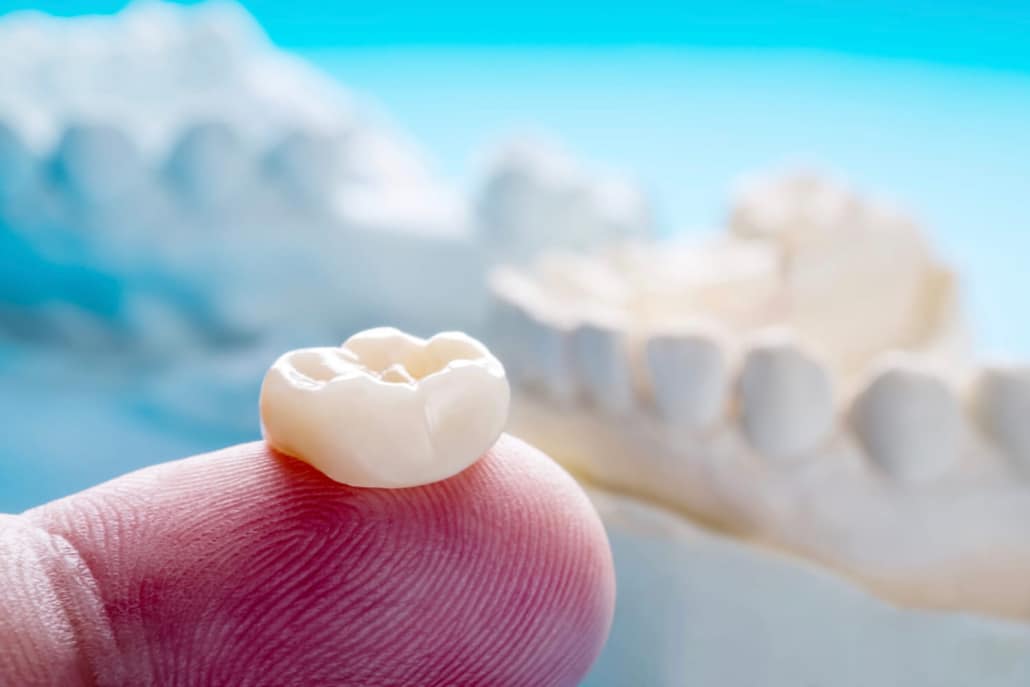
Cerec Crown On Dentist'S Fingertip

Ten Things to Know About CEREC Crowns

If there is a dental crown in your future, read on to learn about a type of crown called “CEREC”, which is the acronym for “Chairside Economical Restoration of Esthetic Ceramics”. These durable and realistic looking crowns are a popular and efficient option for many people. CEREC Crown technology is available at your Today’s Dental locations.

Why would someone need a dental crown?

Getting a crown (sometimes called a dental cap) is one of the most common restorative dental procedures. There are many reasons someone may need a crown. Crowns can restore the look and function of teeth that are worn, damaged, or have deteriorated from significant tooth decay. Dentists will use crowns when a person’s original tooth structure is compromised from a chip, crack, or break, or when there isn’t enough tooth to support a filling for a large cavity. A crown may also be used to restore someone’s smile when the teeth are very worn, discolored, or misshapen. During a root canal, the blood supply to a tooth is cut off, which can cause the tooth to become brittle. Because of this, crowns are commonly used after a root canal to help protect the remaining natural tooth from breaking.  Sometimes, crowns are also used with other restorative devices like dental implants or to help hold a bridge in the proper position. You can learn more about the different types of crowns here.

What is a CEREC Crown?

The CEREC Crown (sometimes referred to as “same day crown”) is a custom dental crown made from a very strong ceramic material. The dentist uses special computer-assisted technology to scan the teeth and create a digital model of the patient’s mouth. Using that scan, the CEREC Crown is then milled from a solid block of ceramic. This type of crown is typically very natural looking and durable.

What are the advantages of CEREC Crowns?

First, the major benefit for many patients is that a CEREC Crown can often be created and placed over the natural tooth in one visit. This saves the patient time and money. Other benefits include: CEREC eliminates the need for the patient to wear an ill-fitting and fragile temporary crown while they wait for a permanent crown to be created in a lab. Easier to match to the color of the natural teeth, which makes them easily blend in with the patient’s smile. Most people won’t be able to notice a CEREC Crown. The CEREC Crown eliminates the need for taking uncomfortable impressions- the tooth is created from a more precise digital scan. CEREC Crowns are very durable and with proper oral hygiene and regular checkups, should last many (10-15) years. The material used to create CEREC Crowns is completely free of metals, making them a great choice for patients with sensitivity to metal. Due to the precise nature of the process to create the CEREC Crown from digital scans, they tend to have a perfect fit and be very comfortable for patients.

Are there any disadvantages to CEREC Crowns?

There are very few disadvantages to CEREC Crowns, but a CEREC Crown may not be an option for everyone’s needs. There are cases where a dentist may not think CEREC Crown is the right choice to restore a patient’s smile. Other things to consider when deciding if CEREC Crown is the right choice: It is not quite as strong as a traditional porcelain crown that is fused to metal. If a patient vigorously grinds their teeth, the CEREC Crown may not be the right choice. In some cases, the CEREC Crown may be more expensive. This depends on insurance coverage. However, it is important to note- since the patient typically only must attend one appointment for a CEREC Crown, there is a time and money savings associated that may help offset the higher cost of the crown. If the dentist suspects there may be fractures below the gumline, the CEREC Crown may not be the right choice because the technology can’t scan below the gumline.

Are CEREC Crowns covered by insurance?

Yes, CEREC Crowns are covered by insurance just as any other crown would be. However, each person’s coverage and out of pocket costs are different. The dentist’s office should be able to determine the amount of coverage and remaining patient costs. If you need a crown- contact your Today’s Dental office today to learn more about the different crown options and to explore if the CEREC Crown is right for you.

Get a dental crown the same day with an Omaha Dentist!

Contact Us

Frequently Asked Questions (FAQ’s)

What is a CEREC Crown and how is it different from traditional crowns?

A CEREC Crown, also known as a “same day crown”, is a custom dental crown made from a strong ceramic material. Unlike traditional crowns, the CEREC Crown is created using computer-assisted technology to scan the teeth and create a digital model of the patient’s mouth. This crown is then milled from a solid block of ceramic, often in a single visit, eliminating the need for multiple appointments and temporary crowns.

Why might someone need a dental crown?

Dental crowns are commonly used in restorative dental procedures. They can restore the appearance and function of teeth that are worn, damaged, or have decayed significantly. Crowns are also used when the original tooth structure is compromised due to chips, cracks, or breaks, or when there isn’t enough tooth left to support a filling. Additionally, after a root canal, crowns help protect the remaining natural tooth, and they can be used with other restorative devices like dental implants or bridges.

What are the advantages of choosing a CEREC Crown?

CEREC Crowns offer several benefits:
They can often be created and placed in a single visit.
There’s no need for temporary crowns or uncomfortable impressions.
They match the color of natural teeth closely.
They are durable, lasting 10-15 years with proper care.
They are metal-free, suitable for those with metal sensitivities.
Their precise fit ensures comfort for patients.

Are there any disadvantages or limitations to CEREC Crowns?

While CEREC Crowns are beneficial, they might not be suitable for everyone. They aren’t as strong as traditional porcelain crowns fused to metal, so they might not be ideal for those who grind their teeth vigorously. They might also be more expensive, depending on insurance coverage. Additionally, if there are suspected fractures below the gumline, CEREC technology might not be the best choice since it can’t scan that area.

Are CEREC Crowns covered by dental insurance?

Yes, CEREC Crowns are typically covered by insurance just like other crowns. However, coverage and out-of-pocket costs vary for each individual. It’s advisable to consult with the dentist’s office to determine the exact coverage and costs associated with CEREC Crowns.

Ready for Your Next Visit?

Schedule your dental appointment today and take the first step toward a healthier smile.

Schedule an Appointment

or call us at (402) 333-6288

Today'S Dental Logo

Today’s Dental began in 1980 with one location. It was founded with the goal of providing high-quality, safe, convenient, and comfortable dental care in a family-friendly setting.

Related Services

  • Cosmetic Dentistry and Orthodontics
  • Teeth Whitening
  • Invisalign®
  • Dental Crowns & Bridges
  • Dentures & Dental Implants

Our Locations

  • Aksarben2141 S. 63rd Street, Omaha
  • Bellevue2207 Longo Drive, Bellevue
  • Millard14406 Harrison St., Omaha
  • Tranquility12322 Emmet St., Omaha
  • Elkhorn20211 Manderson St., Elkhorn
  • Fremont1689 E 23 Street, Fremont

Today’s Dental

We’re committed to working with you and your family to create a comfortable, stress-free, and exceptionally rewarding dental care experience.

Locations

  • Millard
  • Tranquility Park
  • Elkhorn
  • Aksarben
  • Bellevue
  • Fremont

Patient Resources

  • Smile Care Plan
  • Financing
  • Patient Forms
  • Reviews
  • Open Accessibility
  • Privacy Policy

Blog

Pay Online

Join Our Team

Today’s Dental

We’re committed to working with you and your family to create a comfortable, stress-free, and exceptionally rewarding dental care experience.

Locations

  • Millard
  • Tranquility Park
  • Elkhorn
  • Aksarben
  • Bellevue
  • Fremont

Patient Resources

  • Smile Care Plan
  • Financing
  • Patient Forms
  • Reviews
  • Open Accessibility
  • Privacy Policy

Blog

Pay Online

Join Our Team

© Copyright 2026 – Omaha Dentistry | Website design and SEO provided by Robben Media

Link to: Endodontic Disease Link to: Endodontic Disease Endodontic DiseaseRoot Canal TreatmentLink to: Smokers Teeth: The Untold Story of Tobacco and Oral Health Link to: Smokers Teeth: The Untold Story of Tobacco and Oral Health Smokers Teeth And Gum Disease Begins On Your First CigSmokers Teeth: The Untold Story of Tobacco and Oral Health
Scroll to top Scroll to top Scroll to top
Translate »
Accessibility
Accessibility modes
Epilepsy Safe Mode
Dampens color and removes blinks
This mode enables people with epilepsy to use the website safely by eliminating the risk of seizures that result from flashing or blinking animations and risky color combinations.
Visually Impaired Mode
Improves website's visuals
This mode adjusts the website for the convenience of users with visual impairments such as Degrading Eyesight, Tunnel Vision, Cataract, Glaucoma, and others.
Cognitive Disability Mode
Helps to focus on specific content
This mode provides different assistive options to help users with cognitive impairments such as Dyslexia, Autism, CVA, and others, to focus on the essential elements of the website more easily.
ADHD Friendly Mode
Reduces distractions and improve focus
This mode helps users with ADHD and Neurodevelopmental disorders to read, browse, and focus on the main website elements more easily while significantly reducing distractions.
Blindness Mode
Allows using the site with your screen-reader
This mode configures the website to be compatible with screen-readers such as JAWS, NVDA, VoiceOver, and TalkBack. A screen-reader is software for blind users that is installed on a computer and smartphone, and websites must be compatible with it.
Online Dictionary
    Readable Experience
    Content Scaling
    Default
    Text Magnifier
    Readable Font
    Dyslexia Friendly
    Highlight Titles
    Highlight Links
    Font Sizing
    Default
    Line Height
    Default
    Letter Spacing
    Default
    Left Aligned
    Center Aligned
    Right Aligned
    Visually Pleasing Experience
    Dark Contrast
    Light Contrast
    Monochrome
    High Contrast
    High Saturation
    Low Saturation
    Adjust Text Colors
    Adjust Title Colors
    Adjust Background Colors
    Easy Orientation
    Mute Sounds
    Hide Images
    Hide Emoji
    Reading Guide
    Stop Animations
    Reading Mask
    Highlight Hover
    Highlight Focus
    Big Dark Cursor
    Big Light Cursor
    Cognitive Reading
    Virtual Keyboard
    Navigation Keys
    Voice Navigation

    Today's Dental

    Accessibility Statement

    • omahadentists.net
    • June 6, 2026

    Compliance status

    We firmly believe that the internet should be available and accessible to anyone, and are committed to providing a website that is accessible to the widest possible audience, regardless of circumstance and ability.

    To fulfill this, we aim to adhere as strictly as possible to the World Wide Web Consortium’s (W3C) Web Content Accessibility Guidelines 2.1 (WCAG 2.1) at the AA level. These guidelines explain how to make web content accessible to people with a wide array of disabilities. Complying with those guidelines helps us ensure that the website is accessible to all people: blind people, people with motor impairments, visual impairment, cognitive disabilities, and more.

    This website utilizes various technologies that are meant to make it as accessible as possible at all times. We utilize an accessibility interface that allows persons with specific disabilities to adjust the website’s UI (user interface) and design it to their personal needs.

    Additionally, the website utilizes an AI-based application that runs in the background and optimizes its accessibility level constantly. This application remediates the website’s HTML, adapts Its functionality and behavior for screen-readers used by the blind users, and for keyboard functions used by individuals with motor impairments.

    If you’ve found a malfunction or have ideas for improvement, we’ll be happy to hear from you. You can reach out to the website’s operators by using the following email

    Screen-reader and keyboard navigation

    Our website implements the ARIA attributes (Accessible Rich Internet Applications) technique, alongside various different behavioral changes, to ensure blind users visiting with screen-readers are able to read, comprehend, and enjoy the website’s functions. As soon as a user with a screen-reader enters your site, they immediately receive a prompt to enter the Screen-Reader Profile so they can browse and operate your site effectively. Here’s how our website covers some of the most important screen-reader requirements, alongside console screenshots of code examples:

    1. Screen-reader optimization: we run a background process that learns the website’s components from top to bottom, to ensure ongoing compliance even when updating the website. In this process, we provide screen-readers with meaningful data using the ARIA set of attributes. For example, we provide accurate form labels; descriptions for actionable icons (social media icons, search icons, cart icons, etc.); validation guidance for form inputs; element roles such as buttons, menus, modal dialogues (popups), and others. Additionally, the background process scans all the website’s images and provides an accurate and meaningful image-object-recognition-based description as an ALT (alternate text) tag for images that are not described. It will also extract texts that are embedded within the image, using an OCR (optical character recognition) technology. To turn on screen-reader adjustments at any time, users need only to press the Alt+1 keyboard combination. Screen-reader users also get automatic announcements to turn the Screen-reader mode on as soon as they enter the website.

      These adjustments are compatible with all popular screen readers, including JAWS and NVDA.

    2. Keyboard navigation optimization: The background process also adjusts the website’s HTML, and adds various behaviors using JavaScript code to make the website operable by the keyboard. This includes the ability to navigate the website using the Tab and Shift+Tab keys, operate dropdowns with the arrow keys, close them with Esc, trigger buttons and links using the Enter key, navigate between radio and checkbox elements using the arrow keys, and fill them in with the Spacebar or Enter key.Additionally, keyboard users will find quick-navigation and content-skip menus, available at any time by clicking Alt+1, or as the first elements of the site while navigating with the keyboard. The background process also handles triggered popups by moving the keyboard focus towards them as soon as they appear, and not allow the focus drift outside it.

      Users can also use shortcuts such as “M” (menus), “H” (headings), “F” (forms), “B” (buttons), and “G” (graphics) to jump to specific elements.

    Disability profiles supported in our website

    • Epilepsy Safe Mode: this profile enables people with epilepsy to use the website safely by eliminating the risk of seizures that result from flashing or blinking animations and risky color combinations.
    • Visually Impaired Mode: this mode adjusts the website for the convenience of users with visual impairments such as Degrading Eyesight, Tunnel Vision, Cataract, Glaucoma, and others.
    • Cognitive Disability Mode: this mode provides different assistive options to help users with cognitive impairments such as Dyslexia, Autism, CVA, and others, to focus on the essential elements of the website more easily.
    • ADHD Friendly Mode: this mode helps users with ADHD and Neurodevelopmental disorders to read, browse, and focus on the main website elements more easily while significantly reducing distractions.
    • Blindness Mode: this mode configures the website to be compatible with screen-readers such as JAWS, NVDA, VoiceOver, and TalkBack. A screen-reader is software for blind users that is installed on a computer and smartphone, and websites must be compatible with it.
    • Keyboard Navigation Profile (Motor-Impaired): this profile enables motor-impaired persons to operate the website using the keyboard Tab, Shift+Tab, and the Enter keys. Users can also use shortcuts such as “M” (menus), “H” (headings), “F” (forms), “B” (buttons), and “G” (graphics) to jump to specific elements.

    Additional UI, design, and readability adjustments

    1. Font adjustments – users, can increase and decrease its size, change its family (type), adjust the spacing, alignment, line height, and more.
    2. Color adjustments – users can select various color contrast profiles such as light, dark, inverted, and monochrome. Additionally, users can swap color schemes of titles, texts, and backgrounds, with over seven different coloring options.
    3. Animations – person with epilepsy can stop all running animations with the click of a button. Animations controlled by the interface include videos, GIFs, and CSS flashing transitions.
    4. Content highlighting – users can choose to emphasize important elements such as links and titles. They can also choose to highlight focused or hovered elements only.
    5. Audio muting – users with hearing devices may experience headaches or other issues due to automatic audio playing. This option lets users mute the entire website instantly.
    6. Cognitive disorders – we utilize a search engine that is linked to Wikipedia and Wiktionary, allowing people with cognitive disorders to decipher meanings of phrases, initials, slang, and others.
    7. Additional functions – we provide users the option to change cursor color and size, use a printing mode, enable a virtual keyboard, and many other functions.

    Browser and assistive technology compatibility

    We aim to support the widest array of browsers and assistive technologies as possible, so our users can choose the best fitting tools for them, with as few limitations as possible. Therefore, we have worked very hard to be able to support all major systems that comprise over 95% of the user market share including Google Chrome, Mozilla Firefox, Apple Safari, Opera and Microsoft Edge, JAWS and NVDA (screen readers).

    Notes, comments, and feedback

    Despite our very best efforts to allow anybody to adjust the website to their needs. There may still be pages or sections that are not fully accessible, are in the process of becoming accessible, or are lacking an adequate technological solution to make them accessible. Still, we are continually improving our accessibility, adding, updating and improving its options and features, and developing and adopting new technologies. All this is meant to reach the optimal level of accessibility, following technological advancements. For any assistance, please reach out to